The easiest homemade soap recipe using a delightful shea butter melt and pour soap base. Melt and pour soap takes away the worry of mixing the lye and it requires no special equipment. This soap bar recipe is fully customizable, so you can make it just the way you like it!
HOMEMADE SOAP RECIPE
Melt and pour soaps are a great way to ease into soap making. The bars can still be fully customized with your choice of color and scent, while the critical step of measuring out the lye is already taken care of.
To be honest, the idea of soap making always overwhelmed me. When I discovered melt and pour soap bases, I decided I could make my own soap that looks beautiful, smells even more beautiful, and it is so easy anyone can do it!
Once you get the hang of this base, it is fun to play with different scents. One of my summer favorites is my mint lime melt and pour soap, which my husband swears smells just like a mojito.
With a home business and little kids, this mama will have to be satisfied with a melt and pour soap base recipe for now.
PIN IT FOR LATER
LYE FOR SOAP MAKING
Lye is needed to make soap bars and is the ingredient that steered so many people and me away for so long. You need to take precautions when using it, and you have to be sure it is handled properly.
When using lye, proper protection must be taken, including wearing a mask and gloves because it is very dangerous to breathe in and can burn the skin.
However, if used correctly, it doesn’t have to be scary, and it can be used to make a natural soap bar, like my charcoal soap bar recipe. The “during” process, if not handled properly, can be dangerous, but the “after” is completely safe and can be used to make soap for the most sensitive skin.
To make soap, lye is used to emulsify the oils and lye water, which is called “coming to trace.” Lye is needed to make the oils turn into soap and is required to make any soap bars.
A melt and pour soap base eliminates the dirty work as well as cuts out a couple of steps in the process.
BEST SOAP BASE FOR HOMEMADE SOAP RECIPE
When looking for a soap base, you will see that there are several different options. Are you surprised? The world of online shopping has opened up endless possibilities and options for anything we buy, even a soap base.
I will list several options below that you can try. I personally have used the shea butter and glycerin organic melt and pour bases.
This post contains affiliate links, which means I make a small commission at no extra cost to you. Get my full disclosure HERE.
As you can see, there are lots of options when choosing a soap base. All of them will work similarly, and the recipe will remain the same. Should you have any skin sensitivity, allergies, or prefer a vegan option, you can choose your base accordingly.
BEST ESSENTIAL OILS FOR HOMEMADE SOAP RECIPE
Adding essential oils is the best part and can really customize your soap. For example, using lavender and chamomile will make a nice gentle and calming soap bar or foaming hand soap. Or use peppermint and eucalyptus for a cooling soap with soothing properties.
Just like the soap base, the possibilities are endless. You can choose a single essential oil or blend a few together. Depending on how much you make at a time will determine the number of drops you will need to add.
Let your nose be the judge; if you like it stronger, add more, and vice versa. Remember, I am keeping this simple, folks!
Cut the shea butter soap base into small chunks and place them into a double boiler.
Melt over medium heat. Stir occasionally with a wooden spoon.
Remove from heat when it is completely melted.
Add in orange zest and essential oils.
Pour into a soap mold.
Allow it to completely harden and then pop the soap out of the mold.
OTHER ADD IN’S TO TRY
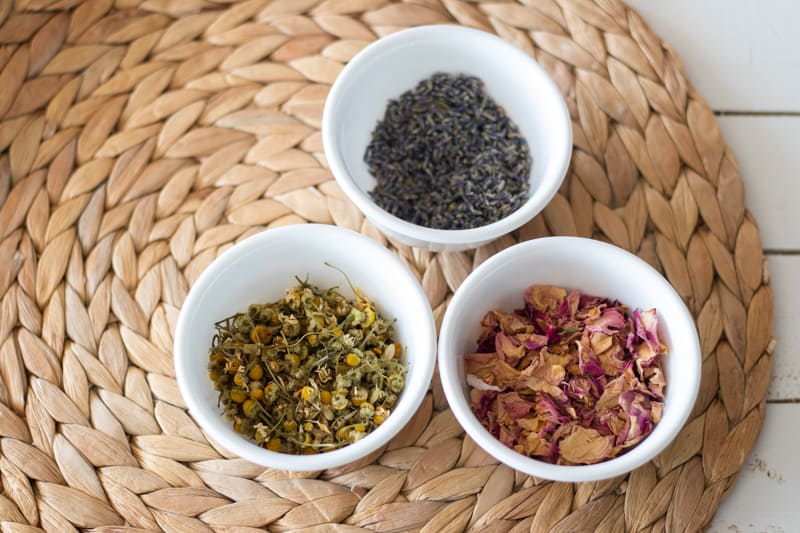
Dried flowers, oatmeal, and even coffee grinds can make wonderful additions to homemade soap bars. These can even make the soap exfoliating!
Coffee
You can use whole coffee beans or ground coffee in soap making. Whole beans are best for decorations and can be pressed into the top before the soap is fully hardened. Or you can add in 1 teaspoon of used coffee grinds for exfoliation.
Oatmeal
Oatmeal has so many great benefits for the skin and can help with many skin irritations. You can use quick oats, colloidal oatmeal, or powder oatmeal. In addition, you can make your own powder oatmeal by blending oatmeal in a high-speed blender as I do with my honey oatmeal soap bars.
Dried Flowers
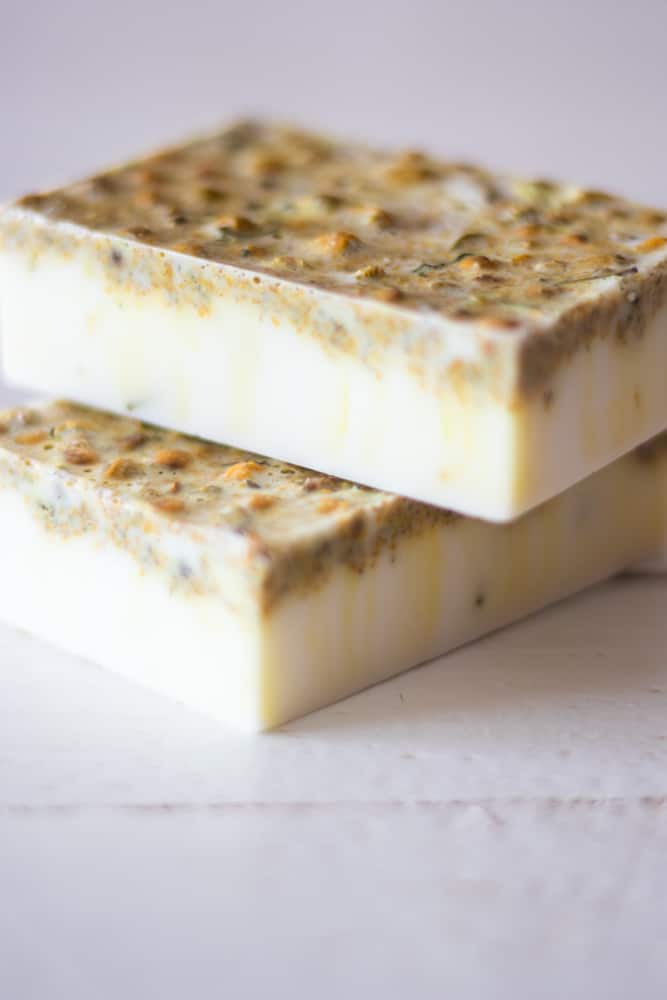
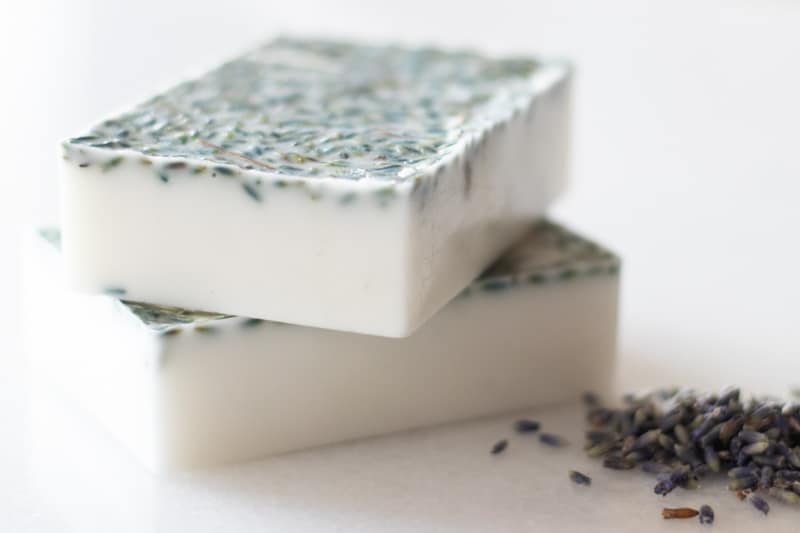
My favorite dried flowers to use are calendulas because I think they look so pretty in the soap! You can also use rose petals, lavender buds, or other greenery.
Zest
Fruit zest is another excellent ingredient to add to your homemade soap. I prefer to use a fine grader to make fine zest to add to my soap. This adds to exfoliation and a lovely scent. Fruit zest is also used in my Christmas soap recipe.
Color
I love using skin-safe dyes to color my soaps. You don’t need a lot of dye to create a beautiful swirl style soap bar.
HOW LONG DOES HOMEMADE SOAP LAST?
Homemade soap with a melt and pour soap base will last at least 12 months.
HOW TO STORE HOMEMADE SOAP?
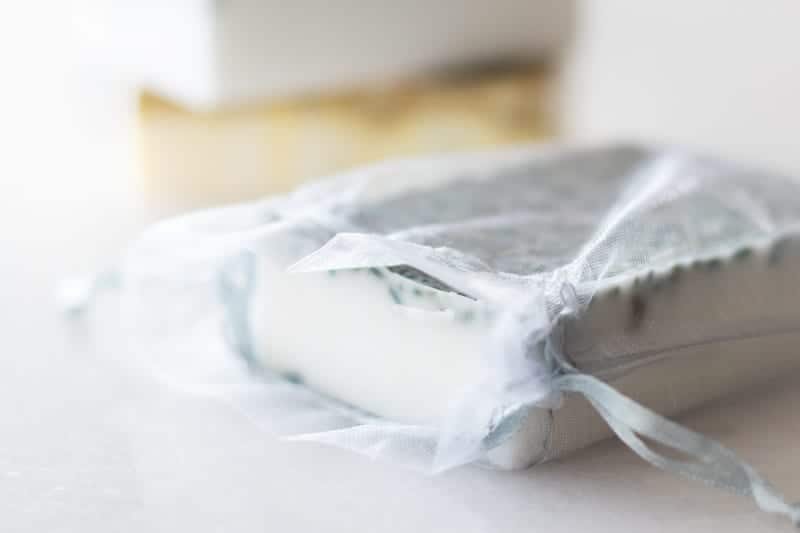
If you make a lot at one time, you can store the soap bars in a covered container with a little circulation. Keep in a cool and dry place until use.
*UPDATE* Since writing this post, I have built up the courage to make my first two cold-process soaps. You can find my homemade chamomile soap here and my tallow soap recipe here.
If you want to stick with melt and pour, but want to get really fancy, you’ll have to check out my soap on a rope recipe!
And don’t forget to leave a comment and review below!
Melt and pour soap takes away the worry of mixing the lye and it requires no special equipment. This soap bar recipe is fully customizable, so you can make it just the way you like it!
Cut the shea butter soap base into small chunks and place them into a double boiler.
Melt over medium heat stirring occasionally with a wooden spoon.
Once it is completely melted; remove from heat.
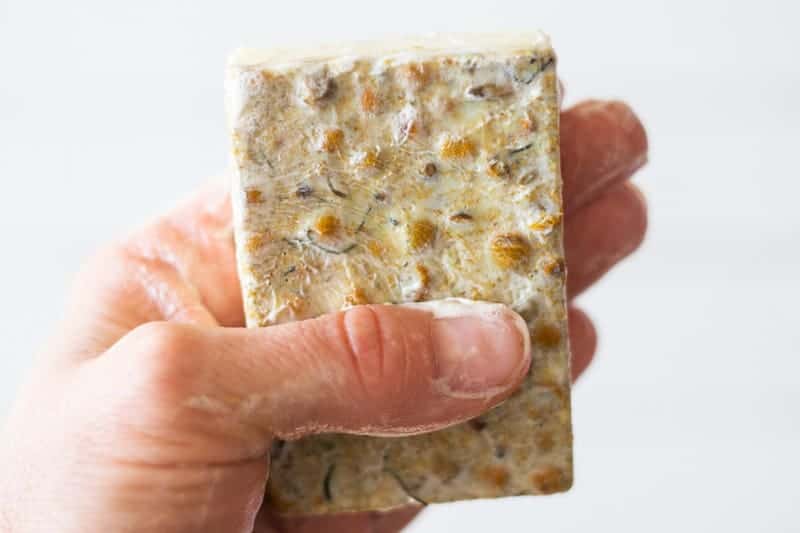
Add in dried lavender, honey, and lavender essential oil. Mix together.
Pour into a soap mold.
Allow it to completely hardened and then pop the soap out of the mold.
Notes
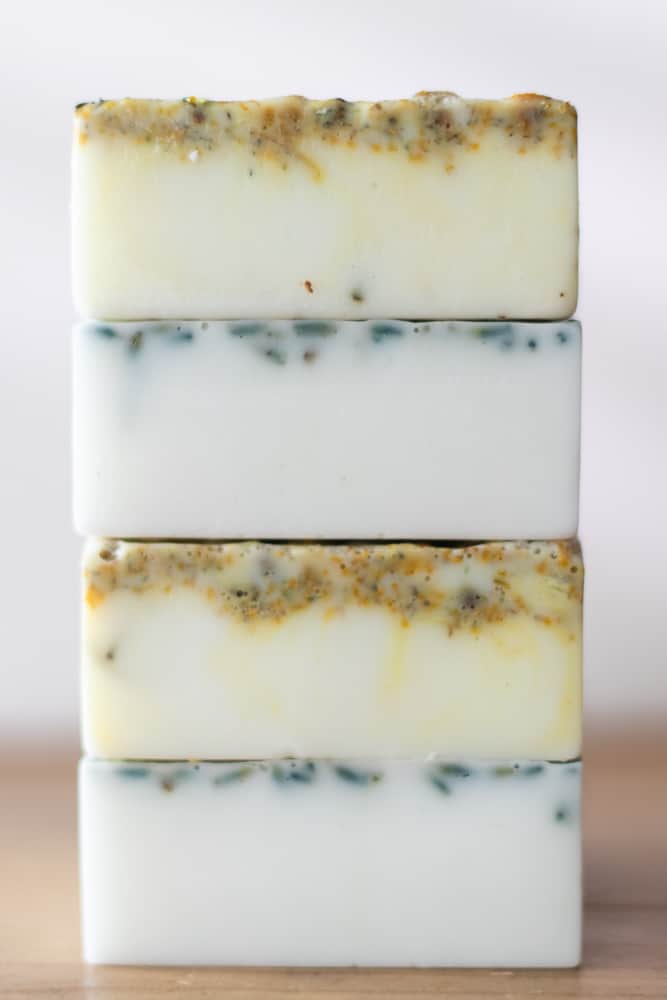
This will make 4 bars of soap if using the same mold I am using. It is linked in the post above.Watch how I make this recipe in my video tutorial above!
Welcome to Our Oily House, I’m so glad you’re here! Explore DIY cleaners, homemade soaps, skincare and hair care recipes, fragrance-free solutions, and sustainable laundry tips for a naturally inspired home.
Actually I’m wondering the same thing myself, although I did read somewhere that it’s generally 10 to 15 drops per pound? Hopefully someone more experienced can confirm this for us!!!?
Pardon me if it’s a silly question. Can I use any honey that I have at home, say Manuka honey? Also, won’t the soap attract ants since honey is sweet? I am not sure that this works.













Hi ! I’ve looked everywhere for essential oil recipes how many drops of essential oil should I put in my soap? If I only used 1 pound.
Actually I’m wondering the same thing myself, although I did read somewhere that it’s generally 10 to 15 drops per pound? Hopefully someone more experienced can confirm this for us!!!?
It really depends on your preference.
10-15 drops will result in a very faint fragrance.
Pardon me if it’s a silly question. Can I use any honey that I have at home, say Manuka honey? Also, won’t the soap attract ants since honey is sweet? I am not sure that this works.
Yes, any honey is fine! I have not had any issues with that.
Love these.. tough to find recipes amidst all the ads and pop-up ads, very distracting. Going to try some goat milk lavender soaps today! Funn!
I am so glad you are enjoying my recipes! Sorry about the ads, that is how I am able to provide so much free content to my readers. 🙂
Hi Laura, first of all thank u for all your wonderful recipes. How much lye do i need for 1 pound of shea butter? Does lye makes soap harder?
For the melt and pour recipes, you don’t need to use lye. I have cold-process soap recipes on the blog that do use lye and explain that process.
Hi, how to avoid m&p soaps from water dews ..sometimes it happens?please let me know
After popping your soap out of your mold wrap it tightly in plastic wrap (you can even shrink wrap) and this will prevent dews.
Can I a loaf mold just the same and cut it when it’s hardened?
Yes!
In what soaps do you use lye i have read all of the recommended soap recipes listed and none are used with lye
I use lye in all my soaps, unless I am using a melt and pour base. I have recipes for both on my blog.