
This post may contain affiliate links. Please see our disclosure policy.
Craft your own luxurious perfumes and signature scents with this collection of DIY perfume recipes. With only natural ingredients and essential oils for fragrance, you can feel great using homemade perfume on your skin.

How to Make Natural Perfume
Natural perfume comes together with just two things: a carrier oil and a blend of essential oils. Start with a small glass roller bottle or a dark glass bottle, fill it most of the way with a light carrier oil like fractionated coconut or jojoba, then add your essential oils and top it off. A good starting point is about 20 to 30 drops of essential oil per ounce of carrier oil, and you can go lighter or stronger from there.
The real trick is layering the scent. Perfumers build a blend from three kinds of notes:
- Top notes are the first thing you smell and they fade fastest. Citrus oils like bergamot, wild orange, and grapefruit are classic top notes.
- Heart notes are the middle of the blend and tend to be floral or herbal, like lavender, geranium, or rose.
- Base notes last the longest and anchor the whole blend. Vanilla, sandalwood, cedarwood, and patchouli are favorites.
A simple starting point is to use mostly heart notes, a little less in top notes, and just a small amount of base note to anchor the blend. Let the finished blend rest in a cool, dark spot for a week or two so the notes can settle before you decide whether to adjust it. If you would rather start with blends that are already measured out, my essential oil roller bottle blends are a great place to begin. When you are ready, the recipes below give you plenty to try.
Essential Oils by Note
Use this as a cheat sheet when you build a blend. Pick one or two from each column:
| Top notes | Heart notes | Base notes |
|---|---|---|
| Bergamot | Lavender | Vanilla |
| Wild orange | Geranium | Sandalwood |
| Grapefruit | Rose | Cedarwood |
| Lemon | Roman chamomile | Patchouli |
| Peppermint | Neroli | Vetiver |
| Lime | Clary sage | Frankincense |
| Eucalyptus | Jasmine | Benzoin |
How to Make Your Perfume Last Longer
The most common frustration with homemade perfume is that the scent fades fast. A few things help it stick around:
- Lean on base notes and fixatives. Base notes hold a blend together and slow how fast it fades. Sandalwood, cedarwood, vetiver, patchouli, and benzoin all act as natural fixatives.
- Go a little stronger. Using more essential oil in your blend makes the scent last longer than a light body spray.
- Let it cure. Give a finished blend a week or two, and up to a month, in a cool dark spot so the notes meld before you judge it.
- Apply to warm spots. Dab it on your wrists, neck, and the inside of your elbows, where body warmth carries the scent through the day.
Oil or alcohol base? An oil base like fractionated coconut or jojoba is simple, stays close to the skin, and is perfect for roll ons. An alcohol base, using a high proof drinking alcohol or perfumers alcohol, sprays and projects more like a store bought perfume. Start light, adding your essential oil blend a little at a time until it is as strong as you like.
Best DIY Perfume Recipes
I love using a bit of homemade perfume every morning when I get ready. It makes me feel more put together and sets the tone for the rest of my day! I choose essential oils for my sprays that are uplifting and energizing, which is the perfect way to start the morning.
Making your own perfume is a fun project because it’s easy and you can create your own custom essential oil blends! Combining your favorite oils (or using one of my tried and true suggestions) is the best way to have a scent that is unique and exciting to you.
I have made quite a few perfume recipes over the years because I love getting creative with them! I’ve collected all of my favorite recipes below so you can experience the joy of perfume-making.

Choosing a Homemade Perfume for You
All of my perfume recipes are made with nourishing ingredients and essential oils; you will love any recipe you choose! However, they do have a few key differences that will help you determine which to make.
Consider the application method first when choosing your homemade perfume recipe. Perfume may be a spray, roll-on (with a roller bottle), or solid (like a balm). How you would like to apply your perfume will help you decide which recipe to make.
After that, it’s a good idea to consider how concentrated you would like your perfume. Body spray is ideal for a lighter option while perfume will provide a stronger scent.
Feel free to experiment with different scents as you create your perfumes. My recipes offer expertly crafted suggestions if you’d rather keep it simple, but making homemade perfume is a fun way to create your own signature scent.
If you are unsure of which recipe to use, I recommend choosing one and diving in. You’re sure to like any of these simple recipes for homemade natural perfume. Plus, you can always make another one later!
DIY Perfume Recipes


Solid Essential Oil Perfume

Cologne and Perfume: What’s the Difference?
You may be wondering what the difference is between cologne and perfume, and the answer may surprise you! While perfumes are often associated with women and colognes with men, they are actually classified based on the concentration of fragrance.
Perfume typically has a 15-30% concentration of fragrance oil while cologne only has 2-4%. That means that perfume is much stronger and intended to be used in small quantities, while cologne will offer a lighter scent.
DIY Cologne Recipes


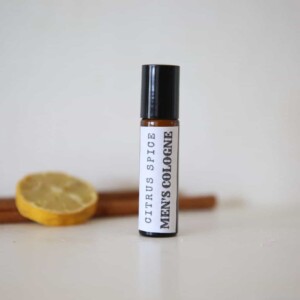
Citrus Spice Cologne
Benefits of Homemade Perfume
Customizable
One of my favorite things about making my own bath and beauty products is being able to customize them. This is especially true for perfume!
Rather than spending ages in the perfume aisle trying to find a scent I like, I can make my own custom blends by combining my favorite essential oils.
I love making a bottle of perfume as a gift for the same reason. Being able to put thought into the exact fragrance blend my recipient would enjoy makes the gift more special.
Save Money
Homemade perfume costs a fraction of what you would spend on commercial fragrance. Store-bought perfumes can get expensive quickly, but homemade perfumes use just a few highly affordable ingredients. Making DIY bath and beauty products is an easy way to cut back on the budget!
Natural Ingredients
With perfume going directly onto my skin and into the air I breathe, I want it to contain only the best ingredients. Making my own perfume eliminates the need for extensive research and reading labels. Instead, I choose ingredients that I feel great about having around myself and my family.
Gentle Fragrance
If you’re like me and find the smell of most commercial products overwhelming, homemade perfume is perfect for you! Synthetic fragrances can be very overpowering to the senses, especially in perfumes and colognes. I love making my own because natural fragrance offers a pleasant scent that isn’t overpowering; plus, I can choose the concentration I prefer.

FAQ
Perfume and body spray are very similar, but with drastically different fragrance concentrations. Perfume is very concentrated and meant to be used in small quantities, while body spray (or body mist) can be used more freely all over the body and clothes. It’s common to use body spray for everyday use and perfume on special occasions, but that is up to personal preference.
Yes, you can. In fact, many of my DIY perfume recipes are made without any alcohol! For the recipes that call for it, you can substitute witch hazel.
Fill a small glass bottle most of the way with a carrier oil like fractionated coconut or jojoba, add about 20 to 30 drops of essential oil per ounce, and top it off. Let it rest for a week or two so the scent can settle.
Stored in a cool, dark spot in a dark glass bottle, an oil based natural perfume keeps its scent for about six months to a year. The blend often smells its best after resting a week or two.
Both work. An oil base like jojoba or fractionated coconut is simple and stays close to the skin, which is nice for a roll on. An alcohol base sprays and projects more like a store bought perfume. Pick whichever suits how you like to wear it.
Usually it needs more base notes or a slightly stronger blend. Base notes like sandalwood, cedarwood, and vetiver act as fixatives that slow how fast the scent fades, and a higher concentration lasts longer than a light body spray.
If you tried any of these DIY perfume recipes, I’d love to hear about it. Let me know your favorite essential oil blends in the comments!



I discovered, quite by accident, that adding vodka to my room spray, it held the fragrance MUCH longer! Much longer by far. I just added equal amounts of all citrus essential oils to a spray bottle for the bathroom, but noticed it evaporated or faded almost immediately. After reading something, I decided to add some organic vodka to it. I can’t remember how much, but it was a fair quantity. Now, the spray lasts a very long time and does not effect the scent at all. I will use vodka in any perfume or cologne recipes I make to see if it holds for them as well, but I expect it to.