
This post may contain affiliate links. Please see our disclosure policy.
Keep the weeds at bay in your rocks, sidewalks, and fence lines without any harsh chemicals or store-bought sprays! This DIY natural weed killer uses all-natural ingredients that work fast to kill weeds. It’s amazingly effective and much safer than most weed killers!

I’ve spent a lot of years experimenting with different homemade weed killers.
I don’t want to use Roundup on my property for a variety of reasons, but I certainly don’t have the time to hand-weed my entire driveway!
After many homemade sprays that barely touched the weeds, I have finally found the perfect combination of ingredients. This homemade weed spray kills weeds fast, and it’s very effective.
Where many of my past iterations failed was in the vinegar dilution. I used to mix my vinegar with water, which just wasn’t strong enough to kill those unwanted plants. In most cases, you don’t need extra-strong (and expensive) horticultural vinegar; you just need undiluted regular white vinegar!
I have been using it along my gravel driveway with great success, and I’ll soon start spraying our fencelines with it too!
I love that it’s safe, effective, and affordable. You’ll never be tempted to use Roundup again!
Table of Contents
Why I Switched to a Natural Weed Killer
- Glyphosate, the active ingredient in Roundup and other popular weed killers, has been shown to be harmful to human (and animal) health. Among many findings, it can affect the nervous system and be a cause of cancer, such as Non-Hodgkin Lymphoma.
- Homemade natural weed killer is much cheaper than most store-bought options! Especially when comparing it to all-natural commercial options. It uses inexpensive ingredients such as vinegar and salt, so you can make a big batch for very little. The savings are even greater if you buy your ingredients in bulk, as I highlight in my post, “The Smarter Way to Save Money on Natural Products.” And for even more ways to cut costs this summer, check out my 17 summer swaps to save money roundup.
- Natural weed killer, when it’s a good recipe, works! Why use chemical weed killers when you can use a natural option that is just as effective?
- With kids and animals roaming in my yard, I prefer to keep my yard as organic and natural as possible. You don’t have to worry about dangerous exposure when you use a natural weed spray.
Does Homemade Weed Killer Actually Work?
Yes! As I mentioned before, I have tried a lot of homemade weed killers that didn’t work, so I know what not to do. This recipe, while simple, really kills the weeds.
The ingredients work together to dry out and kill any plants the spray touches, and it works within 24 hours in most cases. If you’re skeptical, give it a try! What do you have to lose?
What You’ll Need

- Vinegar: I have found distilled white vinegar with 5% acidity to work very well, and it’s far more affordable than stronger vinegar. If your weeds are stubborn and require something more powerful, look for horticultural vinegar (up to 30% acidity) at your local garden shop.
- Salt: You’ll just want regular table salt for this. Salt draws out moisture, which helps kill the weeds faster. Read the notes below regarding Epsom salt and overuse of salt in the soil!
- Soap: This acts as a surfactant, helping the weed killer adhere to the plants and better penetrate the leaves. I just use store-bought dish soap, but my homemade liquid dish soap would work well, too!
- Lime essential oil: Lime oil contains d-limonene, which is a natural compound that’s actually used as an active ingredient in commercial organic weed killers.
- Clove essential oil: Clove oil contains eugenol, which has been shown to help prevent seed germination and reduce the growth of grassy and broad-leafed weeds.
Find the full recipe with instructions and measurements at the bottom of this post!
How to Make Natural Weed Killer

Step 1. Add the salt, either directly into your garden sprayer or into a large glass jar.

Step 2. Add the clove and lime essential oils.

Step 3. Add the dish soap next, then pour in the vinegar last to help reduce fizzing.

Step 4. Stir until the ingredients are well-combined. Pour the mixture into the sprayer and attach the lid.
If mixing directly in the sprayer, you can secure the lid and shake to mix.
How to Apply It
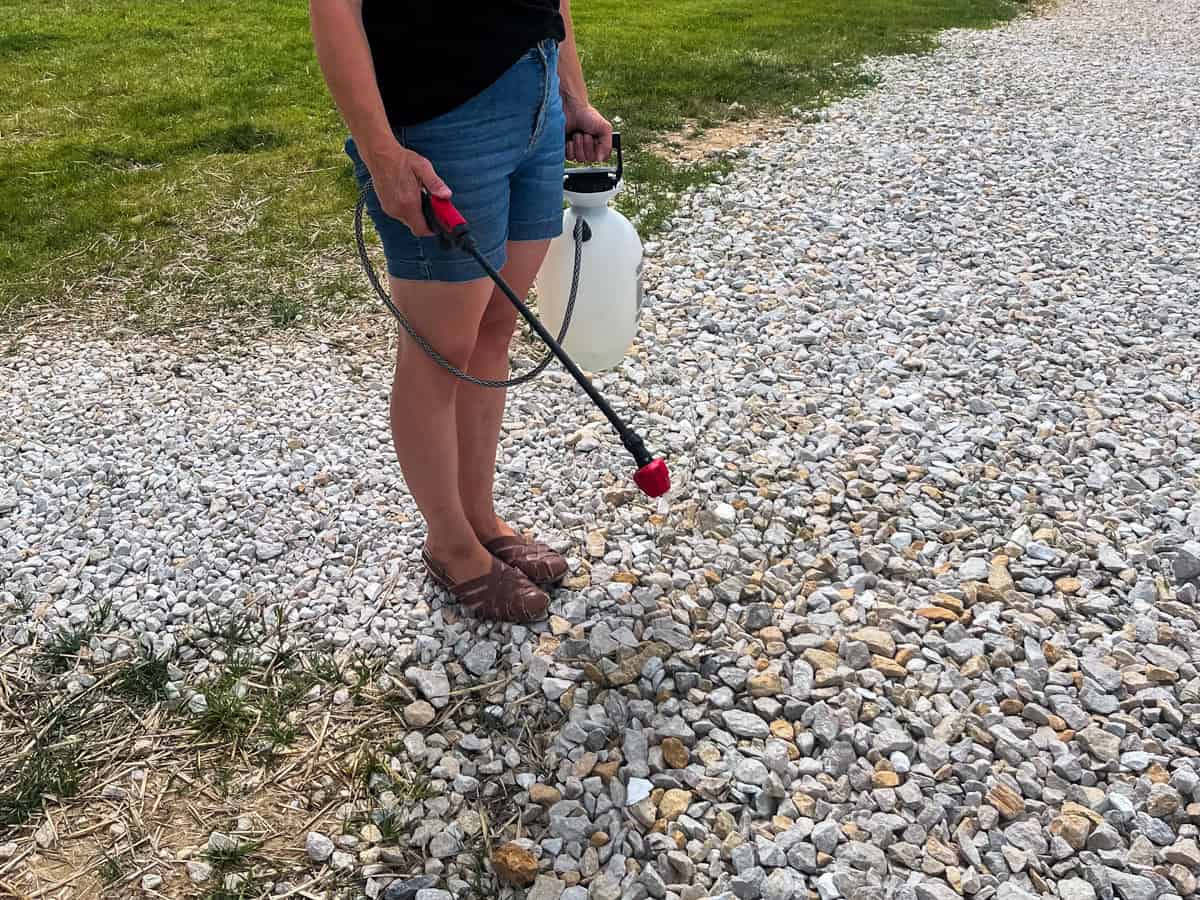
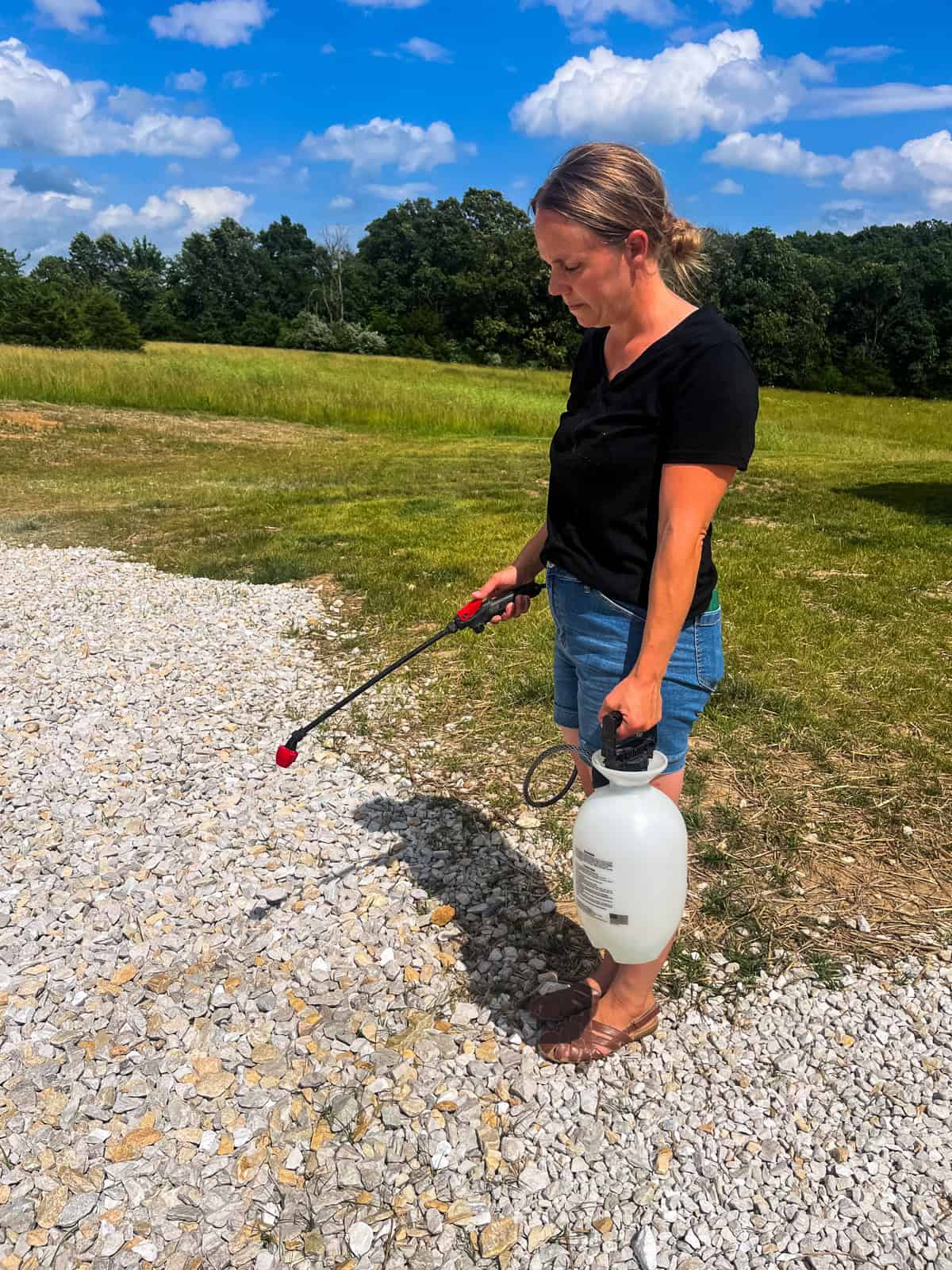
Natural weed killer is just as fast and easy to apply as any commercial options. I use a pump sprayer to apply, so I’m able to hit a large surface area comfortably and with ease. If you have a very small area to apply it to, a small spray bottle could work, but it will get unpleasant for your back and hand very quickly.
Here’s how to apply homemade natural weed killer:
- On a hot, sunny day with no rain in the forecast, spray the mixture directly onto the weeds.
- Thoroughly coat the entire plant, spraying until the liquid begins to run off the leaf tips.
- Keep children and pets away from the treated area until it is completely dry, about 1 to 2 hours.
- You should begin seeing results within 24 hours.
Notes + Expert Tips
- For tough weeds: Upgrade to horticultural vinegar (20–30% acidity) for stronger results on established weeds. Find it at garden centers.
- Do NOT use Epsom salt — it actually benefits plants. Only table salt (sodium chloride) works.
- Store out of direct sunlight. Use within a few weeks.
- Overuse of salt in the same spot can prevent future growth, so I suggest avoiding using this near garden beds and areas where you may want plants to grow.
Where to Use it (and Where NOT to)
This weed killer is such an easy way to keep weeds out of areas where you don’t want anything to grow, such as driveways, sidewalk cracks, between pavers, gravel paths, and fence lines.
The most important thing to note before you use homemade weed spray is that it is non-selective, and it will kill any plant it touches. You most certainly don’t want to use it around ornamental landscaping, in vegetable gardens, on your lawn, or anywhere else there are plants you want to keep.
If you are spraying the weed killer anywhere near wanted plants, use a piece of cardboard to shield them from overspray.
How Often to Reapply
Homemade weed killer can be used as often as needed to keep weeds at bay. As you see new weeds emerging, you can respray to keep the area free of growth.
It’s a good idea to spray weeds when they are still small. Spraying large weeds will kill the plants, but leave the dead plant matter, which can be unsightly and messy.
Tips for Preventing Weeds
- Stay on top of weeding and spraying to prevent any weeds from going to seed.
- When laying new rocks, mulch, and other ground cover, use a barrier, such as cardboard, underneath to suppress the weeds.
- Apply rocks, gravel, and mulch in thick layers, ideally a few inches deep. Avoid leaving exposed soil whenever possible, as it’s the perfect environment to encourage weed growth.
- Avoid mowing lawns too short and regularly feed them with a good quality fertilizer to limit bare patches that will let in weeds.
Recipe FAQs
Yes, if you want to preserve the soil for future plants, avoiding salt is a good choice. The spray won’t be quite as effective or fast-working, but it will still certainly kill the weeds!
You can store the leftover weed killer right in the sprayer. Keep it out of direct sunlight and use it within a few weeks. If you only need to spray a small area, you can cut the recipe in half to minimize your leftovers.
Yep! That’s one of the biggest reasons I prefer to use it over chemical weed killers. You should keep pets and children out of the area for a few hours after spraying as it dries, but after that, it’s completely safe. Note: Keep the spray mixture out of reach of children and pets; it should not be ingested!
Related Recipes
- Homemade Bug Spray for Plants
- All Natural Bug and Tick Repellent
- Homemade Wasp Spray
- Homemade Fly Spray
If you tried this DIY Natural Weed Killer or any other tutorial on my website, please leave a 🌟 star rating and let me know how it went in the 📝 comments below. Thanks for visiting!
DIY Natural Weed Killer

Equipment
Ingredients
- 1 gallon white distilled vinegar, 5% – see notes*
- 1 cup table salt
- 1 tablespoon dish soap
- 15 drops clove essential oil
- 15 drops lime essential oil
Instructions
To Make
- Add the salt to your garden sprayer.
- Add the clove and lime essential oils, then add the dish soap.
- Pour in the vinegar last to help reduce fizzing.
- Close the sprayer and gently shake to combine the ingredients.
To Apply
- On a hot, sunny day with no rain in the forecast, spray the mixture directly onto the weeds.
- Thoroughly coat the entire plant, spraying until the liquid begins to run off the leaf tips.
- Keep children and pets away from the treated area until it is completely dry, about 1 to 2 hours.
- You should begin seeing results within 24 hours.
Video
Notes
- This weed killer is non-selective, and it will kill any plant it touches. Don’t use it in lawns, gardens, or around plants that you want to keep. Use a piece of cardboard to shield nearby plants that may get hit with overspray.
- This spray is best used in driveways, gravel pathways, around pavers, along fencelines, and in sidewalk cracks.
- *For tough weeds: Upgrade to horticultural vinegar (20–30% acidity) for stronger results on established weeds. Find it at garden centers.
- Do NOT use Epsom salt — it actually benefits plants. Only table salt (sodium chloride) works.
- Store out of direct sunlight. Use within a few weeks.
- Overuse of salt in the same spot can prevent future growth, so I suggest avoiding using this near garden beds and areas where you may want plants to grow. You can make this spray without salt for those areas.
- Reapply as often as needed.
- The essential oils are optional, but they do help increase the effectiveness and may even work at preventing weed seeds from germinating.
- While safe to use in areas where pets and children play, be sure to store this weed killer out of their reach. It should NOT be ingested.



I prefer natural weed killer as I have a pet. I made up this recipe but left out the lime essential oil as I don’t have it. Or can I substitute the lime for lemon? I will be making more of this recipe for sure!
Hi Betty Ann! Yes, lemon essential oil is a great substitute for the lime — both contain d-limonene, which is the active compound that helps knock down weeds. Use it 1:1 in the recipe. So glad you’re enjoying it!
This was simple and it began working almost immediately. My husband noticed and was impressed. Now I can take care of the weeds without killing my poultry. THANK YOU!
This worked wonderfully
Thank you!!!