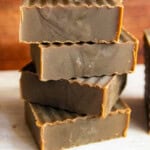
Pine Tar Soap
This pine tar soap is such a fun and unique bar of soap! It has a chocolate-y brown color and a rugged, woodsy scent, making it a great bar of soap for men.
Servings: 12 soap bars
Equipment
- safety gear (safety goggles, gloves, long sleeves)
- Heat-proof glass container (a mason jar works well)
- Whisk or spoon (dedicated to soapmaking - don't use for food)
Ingredients
- 12.16 oz water
- 3.93 oz lye
- 19.20 oz lard (60%) 544.34 g
- 8 oz olive oil (25%) 225.8 g
- 3.2 oz pine tar (25%) 90.72 g
- 1.5 oz castor oil (5%) 45.36 g
- 40 drops cyprus essential oil
- 15 drops cedar essential oil
- 10 drops orange essential oil
Instructions
- Before you begin, make sure to work in a well-ventilated area, away from children and pets. Wear safety goggles, gloves and long sleeves.
- Start by adding the water to a heat-resistant container. Slowly sprinkle in the lye, stirring gently as you go. Remember, lye always goes into water, never the other way around. Set it aside somewhere safe to cool while you prep the oils.
- For the oils, melt down the lard just until liquid. Once melted, take it off the heat and stir in olive oil and castor oil.
- Now it’s time for the pine tar. Add it straight into the oils, giving everything a good stir until it’s fully combined. The pine tar is sticky and thick, so it will be more of a scooping it in, rather than a pour. Make sure you mix it well!
- Once the lye water and oils are cooled to somewhere around 85-90°F, slowly add the lye water to the melted oils.
- Stir by hand constantly until the ingredients are completely combined. Continue stirring until it reaches a light trace.
- Add your fragrance oils in now if using.
- Continue stirring until it reaches a medium trace. (see image in post above)
- Pour the melted soap into your soap molds, smooth the top and let it sit for 1-2 weeks.
- Remove the soap from the molds, and if you used a loaf mold, cut it into bars, then set the soap bars on their ends and place them in a dry area for 8-10 weeks to cure.
Notes
See the post above for step-by-step photos.
This soap has a 5% superfat.
It took me about 10 minutes of stirring to come to a light/medium trace.
Safety: Always work in a well-ventilated area, away from children and pets, and wear proper safety gear. Don't alter the recipe without recalculating with a soap calculator.
Tips
- If you're new to cold process soapmaking, it's a good idea to read through the instructions a few times before beginning to make sure you understand the process. You might also like my beginner's cold process soap recipe.
- Whatever you do, don't use an immersion blender for this recipe! It's tempting to save some time, but pine tar soap comes to trace very quickly, so you will likely end up with a big block of solidified soap in your bowl if you don't mix by hand.
- This soap has an extraordinarily long cure time. Don't try to shorten it; it's necessary because of the high water content in this soap.
- When you cut the loaf of soap, make sure you save the ends to use later in homemade rebatch soap!