DIY Bathtub Cleaner
Get your bathtub sparkling clean with just a few natural ingredients!
Servings: 4 ounces
Equipment
- Mixing bowl
- Small jar for storage
Ingredients
- 4 oz baking soda
- 1.75 oz liquid castile soap
- 0.75 oz hydrogen peroxide 3% solution
- water optional, see notes below
Instructions
How to Make It
- In a mixing bowl, combine the baking soda, castile soap, and hydrogen peroxide. Stir until it forms a thin paste.
- Transfer the paste to a small jar with a lid (I just use any old container I have).
- If you have extras, you can store them in a cool, dark place. Just use it up within a week.
How to Use the Bathtub Cleaner
- Dampen a rag, sponge, or cloth with warm water.
- Scoop out a small amount of the cleaner or dip your rag into it.
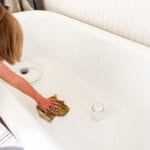
- Gently scrub the tub surface using light, circular motions. There’s no need for heavy pressure. The cleaner is very effective, and we don't want to damage the surface of the bathtub.
- As you scrub, you’ll notice the soap scum lifting away. The surface will start to feel smoother pretty quickly, that’s how you’ll know it’s working.
- Rinse thoroughly with warm water and wipe dry with a clean cloth.
Notes
- This paste is safe for enamel tubs, as well as acrylic and fiberglass tubs, as long as you use a soft, non-scratch cloth or sponge and be gentle.
- Do not use on natural stone resin tubs.
- I like the consistency of this cleaner; it spreads nicely. If you want it even thinner, you can add a few splashes of water.
- In rare instances, such as very dirty bathtubs with a lot of buildup, you might need to go over it twice.
- This is particularly effective for cleaning soap scum. I also have a daily shower cleaning spray you can use between cleanings to help keep it clean longer.
- If you have a particularly stubborn stain, apply a thick layer of this cleaning paste to it and let it sit for a few hours. Wipe away and scrub with more paste as needed.
- If you're also cleaning the shower walls above your bathtub, save the tub for last. It's always recommended to clean from top to bottom. You can clean the shower walls with my DIY shower scrub.
- Cleaning the tub can be painful on your knees. Fold up a towel and use it as a knee pad to help with this.