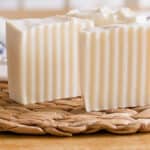
Cold Process Shampoo Bars
Cold process shampoo bars are easy to make, cost-effective, and have amazing benefits for your hair. Made with nourishing ingredients and pure essential oils, these shampoo bars are the perfect all-natural solution.
Servings: 12 bars
Equipment
- Thick glass bowl or jar, make sure it is heat resistance
- Safety goggles
- Rubber Gloves
Ingredients
- 10 ounces tallow
- 8 ounces olive oil
- 8 ounces shea butter
- 8 ounces castor oil
- 4.41 ounces lye
- 9.86 ounces distilled water
- 15-20 drops essential oils optional
Instructions
- Using a digital scale, measure out your water and pour it into a heat-resistant glass bowl or jar.
- Measure out the lye and add it to the water. Stir the lye into the water slowly and stir until it dissolves. NEVER add water to the lye, only lye to water.
- Using the digital scale, measure out the tallow, olive oil, shea butter, and castor oil. Pour into a saucepan and melt over medium heat.
- Once the ingredients are melted, allow them to cool back down to 100 degrees.
- Once the fats cool to 100 degrees, slowly add the lye and water to the oils, mix with an immersion blender. This will take a couple of minutes. You will know it is the right consistency when the soap from the blender drips and pools up at the top of the soap in the saucepan. This is known as the trace.
- If using essential oils, add those in now. Stir well.
- Pour the soap into the soap molds. If using silicone soap molds, no prep is required before pouring it in. Other molds may require parchment paper.
- Allow the soap to harden and sit in the molds for at least 24 hours or up to 3 days.
Remove the soap from the molds and allow it to cure for 3-4 weeks before using.
Notes
Safety Notes
- When mixing the lye into the water, avoid breathing in the fumes. Always work in a well-ventilated room, or even better, outside.
- Wear safety goggles, gloves, and long sleeves as lye can be very dangerous if it gets in the eyes or on the skin. Don't worry; once the lye is mixed with the fats, it is no longer dangerous. Remember, lye is in all soap, so it isn't as scary as it sounds.
- Before whipping up a batch of cold process soap, be sure to have a spray bottle of vinegar nearby as vinegar can neutralize the lye in an accident.
- I used a soap calculator to get the exact measurements. If you want to change up the recipe at all, you will need to get new measurements to make sure your shampoo bar comes out right and use the correct lye-water mixture.
- Keep separate utensils and bowls for soapmaking that are not used for food.
- The lye water mixture will quickly rise to over 200°F, so you must use a container that can handle the rapid increase in temperature.
- This recipe should be safe to use on dyed hair. However, it is important to test it first in a small, inconspicuous area to see how your hair reacts.
- See the post above for step-by-step process photos.
- If you aren't sure about cold process soap yet, you can make melt and pour shampoo bars to dip your toes into soapmaking!
- Be sure to keep your soap ends and any other scraps to make rebatch soap.