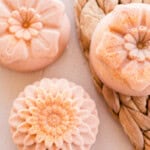
Turmeric Soap Recipe
Follow along with this cold process soapmaking recipe and enjoy homemade turmeric soap in as little as 5 weeks.
Servings: 10 soap bars
Equipment
Ingredients
- 12 oz Coconut oil
- 8 oz Shea butter
- 5 oz Sunflower oil
- 3.66 oz Lye
- 8.18 oz Water
- 1.5 tbsp Turmeric powder
Instructions
- Use a digital scale to measure out the water. Then add it to the heat-resistant container.
- Slowly add the lye to the water. Stir the lye into the water until dissolved. Note that the chemical reaction will cause it to heat up quickly. Set aside to cool to about 120-130°F
- Melt the coconut, shea butter, and sunflower oil in a small saucepan on the stove over medium heat.
- Once melted, set aside to cool slightly.
- Add all the oils to a metal mixing bowl.
- Pour the lye water in with the melted fat and oil a little at a time and mix with an immersion blender.
- Continue adding the lye water and mixing between each round until the soap comes to a trace.
- To check the “trace,” hold the immersion blender over the bowl; if the soap drips and pools up on the top, it’s come to the correct trace. (see image in post)
- Whisk in the turmeric powder, or use the immersion blender to mix.
- Pour the soap into the mold and allow it to dry for 24 hours or up to 3 days.
- Once the bars are dry, set them on a drying rack or a shallow dish on their ends to cure for 5-6 weeks before enjoying them.
Notes
I’ve included detailed pictures of each step above for visual reference, including the soap coming to trace if needed.
Wear gloves, goggles, and long sleeves, and work in a well-ventilated area away from children.
This recipe assumes a 5% superfatting level.
Any adjustments to this recipe will require recalculating with a soap calculator.
You can use any soap mold you prefer. I used silicone bars and silicone flower molds. You can also use a loaf mold and cut it with a crinkle cutter (be sure to save the ends for rebatch soap!). In any case, I do recommend sticking with silicone because it's easiest to use and doesn't require any prep work.
Keep in mind, the yield on this recipe will vary depending on how big your soap bars are.