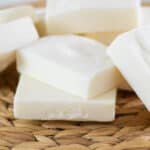
Tallow Soap Recipe
This cold process tallow soap is made using pure tallow and coconut oil. It is the perfect soap bar to use for dry, sensitive skin.
Servings: 12 soap bars
Ingredients
- 18 ounces of beef tallow
- 12 ounces of coconut oil
- 4.42 ounces lye
- 9.89 ounces of water
Instructions
- Using a digital scale, measure out your water and pour it into a heat-resistant glass. This is important because when you add in the lye, it will get very hot very quickly.
- Measure out the lye and add it to the water. Stir the lye until it dissolves. Note, the chemical reaction will cause it to heat up quickly.
- Measure out the tallow and coconut oil, add to a saucepan. Melt over medium heat.
- Once the ingredients are melted, allow them to cool back down to 100 degrees. This may take a couple of hours.
- Once the fats reach 100 degrees, it is time to mix the lye water with the oils. Slowly add the lye and water to the oils and mix with an immersion blender. This will take a couple of minutes. You will know it is the right consistency when the soap from the blender drips and pools up on top of the soap in the saucepan. This is known as the trace.
- If using essential oils or color, add those in now. Stir well.
- Pour the soap into the soap molds. If using silicone soap molds, you don’t have to do anything to them before adding the soap. Other molds may require parchment paper.
- Allow the soap to harden and sit in the molds for at least 24 hours or up to 3 days.
- Remove the soap from the molds and allow it to cure for 3-4 weeks before using.
Notes
Safety Notes
- Proper caution must be taken when working with lye. Wear safety goggles, gloves, and a mask, and work in a well-ventilated area away from children and pets.
- Always add the lye to the water, not the other way around. Pouring water into a jar of lye can cause a dangerous reaction.
- Allow your soap bars to cure properly to avoid skin irritation from residual lye. Curing time is 3 weeks minimum.
- If you change any of the ingredients or amounts in the recipe, you'll need to recalculate the recipe using a soap calculator. This recipe is made with 5% superfat.
- As daunting as it might sound, it is imperative that you measure your ingredients precisely. This is very easy to do if you have a digital kitchen scale.
- You can use a variety of soap molds when making soap with tallow, but I highly recommend using silicone. They are the easiest molds to use and require no prep.
- Check out the post above for step-by-step photos.
- Be sure to use an immersion or stick blender to get the correct trace. It will take much longer if doing this by hand!
- If this is your first time making cold process soap, check out my beginner's soap recipe to learn everything you need to know.