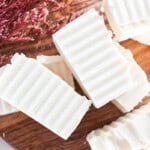
Shea Butter Soap Recipe
If you’ve never made cold-process soap before, this shea butter soap recipe is a solid place to start. It’s simple, effective, and, after a little patience (okay, five weeks), you’ll have a batch of gorgeous, handmade bars ready to go.
Servings: 10 bars (approx)
Equipment
- Bowls
Ingredients
- 12 oz Shea butter
- 4 oz Fractionated coconut oil
- 5.34 oz Water
- 2.39 oz Lye
- 25 drops Orange essential oil optional
Instructions
- Working in a well-ventilated area and wearing proper safety gear, add the water to a jar or container that can handle high heat.
- Carefully and slowly add the lye to the water, then gently stir it until dissolved. Note the liquid will shoot up over 200°, so using a container that can handle the rapid increase in temperature is vital!
- Set the lye water aside to cool while you do the next step.
- Melt the shea butter and fractionated coconut oil in a small saucepan over medium-low heat. You can also use a double boiler. However, I’ve found it works just as well using a saucepan while stirring frequently.
- Once the shea butter and fractionated coconut oil are melted, you’ll want to let it cool down to about 100°F-110°F. The same goes for the lye water. You want to aim for them to be within 10° of each other. You may need to wait a little longer for one or the other to cool, and that’s OK.
- Now, using a large mixing bowl with tall sides (to prevent splashing), add the melted oils, then the lye water, and mix with an immersion blender until it comes to a light trace. About one minute is usually enough.
- Add your orange essential oil, and continue to mix with the immersion blender until a *medium trace—about thirty seconds or so.
- Pour the soap into your prepared soap molds and allow them to harden for 24 hours or up to 3 days before removing them from the molds.
- Lay the bars on their ends about an inch apart, and allow them to cure for five weeks before using.
Notes
- *Not sure what the trace should look like? Check out the step-by-step images above! You’re aiming for a consistency similar to pudding—thick enough to leave a trail on the surface when drizzled. (I also go into detail on trace in my beginner's soap bar recipe)
- If you use a rectangular loaf soap mold, you will need to cut the soap into bars after it hardens, then lay them on their ends to cure.
- Ensure you position the soap bars on their sides with good airflow around them and wait for at least five weeks. The wait time is necessary to allow excess water to evaporate from the soap and ensure it’s hard before use.
- Any substitutions (except the fragrance) to this recipe will need to be recalculated using a soap calculator.
- This soap has a very mild orange fragrance. If you want an orange-smelling bar, you can add up to 40 drops.