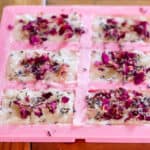
Natural Glycerin Soap Bar Recipe
A natural glycerin soap bar recipe for moisturizing skin.
Equipment
- Immersion or stick blender
- Digital kitchen scale
- Safety goggles and gloves
- Heat resistant jar
Ingredients
Part I (steps 1-6)
- 8 ounces coconut oil
- 4 ounces castor oil
- 2 ounces shea butter
- 2 ounces jojoba oil
- 2.1 ounces lye
- 4 ounces water
part II (steps 7-8)
- 6 ounces alcohol
- 3 ounces glycerin
Part III (steps 9-14)
- ¼ cup sugar
- ½ cup water
- 30-50 drops essential oils optional
Instructions
- Use the digital scale to measure out correct amounts. Add water to the heat-resistant glass. Slowly add the lye to the water (Note: never add water to lye), stir until dissolved, set aside.
- Melt fats and oils on low heat in either a crockpot or saucepan.
- Once melted, remove from heat and allow to cool to 100°F.
- Once the oils have cooled to the correct temp, pour the lye water in with the oils. Mix with an immersion blender until it comes to a trace. Check trace by letting the mixture drip off the blender; it is ready if it pools up on the top.
- At this point, if you were using a saucepan, transfer everything to a crockpot.
- Cover the crockpot with plastic wrap and set it to "warm" for approximately 2 hours. My crockpot gets too hot on the low setting, so I found it best to use the warm setting.
- After the 2 hours have elapsed, add the alcohol and glycerin to the crockpot stirring in with the immersion blender until smooth.
- Allow the soap to sit in the crockpot on warm for an additional 2 hours uncovered.
- After the final 2 hours, dissolve the sugar in the water.
- Remove the pot from the base, stir in the dissolved sugar water.
- If using essential oils, add them in now. If using any coloring, jojoba beads, or dried flowers, they can be added in now.
- Pour the soap into soap molds.
- Allow the soap to set and harden in the molds before popping them out. This can take 2-3 days, depending on the size of the bars.
- Once the soap bars are popped out, they will need to cure in a cool dark place for 4 weeks before using them.
Notes
When working with lye, wear protective clothing, gloves, a mask, and goggles. Always work in a well-ventilated room away from children and pets.
Use heat-resistant and lye-resistant containers for mixing. Not all containers can handle the soapmaking process.
This DIY has quite a few steps! I suggest checking out the process step images in the post above and watching the video before making this soap!