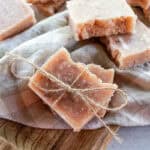
How to Rebatch Soap
Making rebatch soap is a fun way to prevent waste in soapmaking. Whether you have a batch of soap you are unhappy with or it’s time to use up those soap scraps, rebatching will allow you to reuse any unwanted soap.
Servings: 12 bars
Equipment
- Double boiler or crock pot or a large pot and heat-resistant bowl
- Silicone loaf soap molds or other soap molds
- Spoon or spatula for stirring
Ingredients
- 30 oz Grated soap scraps from old bars or messed up new bars
- 6 oz Distilled water
- Optional: Fragrance oils or essential oils for scent
- Optional: Colorants such as micas, clays, oxides, etc. for a new look
- Optional: Other additives like honey, oatmeal, etc. for additional properties
Instructions
- Shred any larger pieces of soap with a box grater.
- Add the shredded soap and small soap scraps to a double boiler, or crock pot, leaving room at the top to stir.
- Next, add distilled water and heat on medium-low, stirring often, until the soap is melted. Note: It's going to be thick and gloopy, not smooth like typical melt and pour soap.
- Remove from the heat and stir in the fragrance if you are using it, along with any other add-ins.
- Quickly scoop/pour the soap into your soap mold. It will probably be more of a scooping action than a pour because of how thick the mixture is.
- Tap the mold to release air bubbles.
- Let the soap cool completely, for about 24 hours. If the mold pulls away from the soap easily, it's ready. Otherwise, wait another day.
- Cut the finished soap into bars. You can use them immediately, but I do suggest letting them cure for 2 weeks for a firmer bar. Then, enjoy!
Notes
- You can adjust the recipe based on how much soap you have to use up. As a general rule of thumb, use 2 ounces of water for every 10 ounces of soap.
- If you suspect your unwanted soap is lye-light or lye-heavy, it is best to consult a soap-making resource for guidance on adjusting the recipe.
- More water will help the soap melt more smoothly, but the final soap will take longer to dry.
- As the soap melts, you can help it along by spritzing it with more water.
- Only rebatch homemade cold-process or hot-process soap. Commercial soaps may have added ingredients that can interfere with the rebatching and react to the heat.