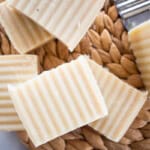
Beeswax Soap Recipe
Follow this recipe to make your very own beeswax soap at home.
Servings: 12 Soap Bars
Equipment
- Safety goggles
- Gloves
Ingredients
Fats & Oils
- 10 oz Palm oil
- 6 oz Avocado oil
- 6 oz Cocoa butter
- 4 oz Sunflower oil
- 0.5 oz Yellow beeswax
Liquid & Lye
- 7.68 oz Water
- 3.43 oz Lye
Instructions
- Use the digital scale to measure the water. Then add it to the heat-resistant container.
- In a well-ventilated area, carefully measure out the lye (use the safety goggles/apron/gloves) and add it to the water slowly. Stir as its added until dissolved. Be aware the water will fizz and heat up quickly due to the lye chemical reaction.
- Set aside to cool.
- Measure out the palm oil, avocado oil, cocoa butter, sunflower oil and beeswax, then add to a small saucepan.
- Melt these ingredients together over a low heat.
- Once melted fully, remove from the heat and allow time to cool. An ideal temperature to cool to is around 120°-130°.
- Once cooled, transfer melted fats and oils to a metal mixing bowl.
- Add the lye/water mixture in small amounts.
- Mix with an immersion blender, adding the lye slowly as you go.
- Check the ‘trace’ by holding the immersion blender over the bowl; if you see drips coming from the soap that pools on top of the mixture, it’s the right trace, and you can stop mixing.
- Pour the soap into silicone molds. Or, if you’re using any other mold, make sure you line it with parchment paper.
- Allow the soap to cool completely for at least 24 hours (up to 3 days is fine).
- Remove the soap from the molds and place them on their ends to allow space and time to cure (a 3-6 week process) before use.
Notes
This recipe will make approximately 12 soap bars.
This soap has a superfat of 5%
Safety Notes
- Proper safety equipment is extremely important when handling the lye. Wear gloves, long sleeves, safety goggles, and an apron, and tie back long hair.
- Work in a well-ventilated area away from children and pets, and store the ingredients out of their reach.
- Take extra care when pouring the lye into the water, as this causes a chemical reaction, and the reaction happens fast!
- Always pour the lye into the water, never the water into the lye.
- Never deviate from the weight and amount of ingredients listed; you’ll need to recalculate this with a soap calculator if you do!
- Check out my beginner's soap recipe for more helpful tips and tricks.