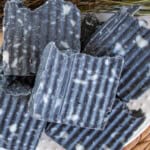
Activated Charcoal Soap Recipe
Make beautiful and cleansing activated charcoal soap at home! This cold process soap is such a fun one and sure to make your skin feel incredible.
Servings: 11 Bars
Equipment
- Safety goggles
- Gloves
Ingredients
- 6 oz Avocado oil
- 4 oz Palm oil
- 8 oz Castor oil
- 14 oz Coconut oil
- 1 tbsp Activated charcoal
Lye & Liquid
- 4.70 oz Lye
- 10.51 oz Liquid
Instructions
- Cover any exposed skin, wearing gloves, eye protection, and work in a well ventilated area.
- Use a digital scale to measure out the water. Then, add it to the heat-resistant container.
- Slowly add the lye to the water. Stir the lye into the water until dissolved. Note that the chemical reaction will cause it to heat up quickly. Set aside to cool to about 120-130°F
- Melt the coconut and palm oil in a small saucepan on the stove over medium heat.
- Once melted, set aside to cool slightly.
- Add all the oils to a metal mixing bowl.
- Pour the lye water in with the melted fat and oil a little at a time and mix with an immersion blender.
- Continue adding the lye water and mixing between each round until the soap comes to trace.
- To check the “trace,” hold the immersion blender over the bowl; if the soap drips and pools up on the top, it's come to the correct trace.
- Whisk in activated charcoal
- Pour the soap into the mold and let dry for 24 hours up to 3 days.
- Cut the soap into bars, and space out on a drying rack for 5-6 weeks to fully cure.
Notes
To get the blotchy white patches as seen in the soap pictures above, don't over stir the charcoal into the soap.
I’ve included step-by-step images in the post above for visual guidance. If you would rather watch, I’ve included the complete step-by-step video tutorial here in the recipe card!
Safety notes:
- Always take proper precautions when working with lye. Lye Is necessary to make soap, but in its natural form, it can damage the skin, cause burns, and even blindness.
- Work in a well-ventilated area, or outside if possible, and always wear goggles, long sleeves, and gloves.
- Keep children and pets out of the room while mixing the soap, and store the ingredients out of their reach.
- Always add the lye to the water, never the water to the lye as this can cause a dangerous reaction.
- Follow the instructions closely and don't change any of the ingredients or quantities. If you want to alter the recipe, everything must be recalculated with a soap calculator.
- Oil & Fats Total: 32.00 oz
- Lye & Liquid Total: 15.21 oz
- Total Batch Yield: 47.21 oz