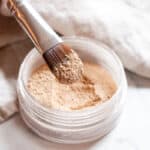
DIY Mineral Makeup
Making your own makeup has never been easier! This DIY mineral makeup is made with simple ingredients and offers long-lasting coverage throughout the day. Have fun creating your own custom color for makeup that perfectly matches your skin tone.
Servings: 1 jar
Equipment
- Cosmetically-approved jar with sifter lid An old foundation container works well.
Ingredients
Ingredients
- ½ tsp Titanium dioxide
- ¼ tsp Non-nano zinc oxide
- Iron oxides (red, yellow, brown) Start with just a pinch of your chosen color, then add more as needed. Trust me, they go a long way.
Optional Ingredients
- Pinch of stearic acid This can act as a binding agent to improve blendability and wear time and is included in a lot of mineral makeups but it's not essential.
Instructions
- Disinfect your jar and lid thoroughly.
- Start by adding your titanium dioxide and non-nano zinc oxide to the jar. This will be your base color.
- Next, add the iron oxide, just a pinch at a time, until you get the right color for your skin tone. For a warmer tone, add a tiny amount of yellow iron oxide or brown iron oxide and blend it thoroughly. For darker skin tones, add a tiny amount of red iron oxide to the mix and blend well. Be very cautious with this color, as a little goes a long way.
- Consider adding stearic acid for improved blendability. Start with a very small amount and mix it well. You can always add more later if needed, but it's easy to overdo it. Stearic acid is optional, and you can see how the makeup performs without it first.
- Gently tap the jar on a flat surface to distribute the powder evenly.
Notes
- Perform a patch test before using this product. Keep away from the eyes.
- Wear a mask while handling the mineral powders, and avoid inhaling them when applying your makeup.
- I used 1/4 teaspoon of brown iron oxide and 1/4 teaspoon of Brazilian yellow clay to match the skin tone of my face.
- If you just use brown iron oxide alone, the mineral makeup will end up with a greenish tint.
- If you prefer to have a shimmer in your mineral makeup, I recommend adding a bit of mica powder. Use care in sourcing your mica powders, as they are often unethically produced.
- Scroll up to the post for step-by-step images!